
The Town Of Boley - Oklahoma
Oklahoma is home to one of the largest concentrations of historic all-Black towns in the United States. These communities were founded by African Americans seeking freedom, independence, and opportunity after the Civil War.
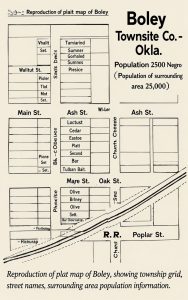
Boley was founded by T. M. Haynes on land owned by Abigal Barnett, a Creek “Freedman.” Lake Moore, vice president of the Ft. Smith & Western Railroad wanted to establish a depot at the Boley site believing African Americans were capable of governing themselves. Boley was named after J. B. Boley, a retired railroad official. Founded in 1903 and incorporated in 1905, Boley prospered. The Boley Progress, a weekly paper, began in 1905.
The paper and advertising campaigns lured many residents to the new town. By 1911 Boley boasted more than 4,000 citizens (25,000 with surrounding areas) which supported many businesses, including two banks and three cotton gins.
Booker T. Washington visited the town and called it, “the most enterprising and in many ways the most interesting Negro town in the United States.” The town supported two colleges, the Creek-Seminole College and the Methodist Episcopal College. Boley also had its own electrical generating plant, water system, and ice plant. Around 1912, the Masonic Grand Lodge completed a majestic Masonic Temple. At the time it was the tallest building between Okmulgee and Oklahoma City.
Like many rural towns, Boley suffered through the hard times of the 1920s and 1930s. By World War II the population had declined to 700 people. At the dawn of a new century, the town is hopeful again. The downtown business district is a National Historic Landmark. The John Lilley correctional center, Smokarama, and the Boley Public School System provide jobs to the area. The town hosts the oldest African-American community-based rodeo every Memorial Day weekend.
Image Captions
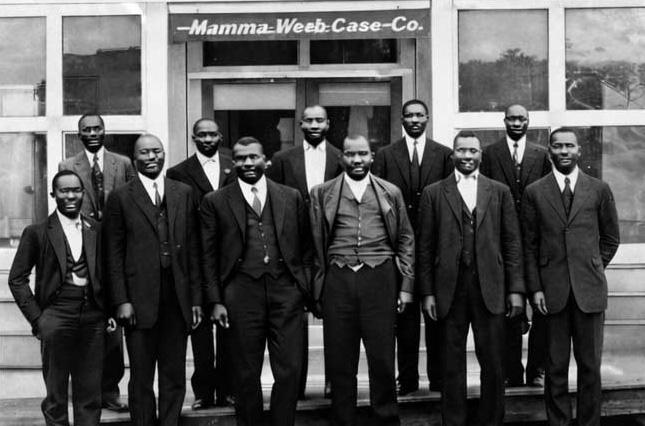
- Town Council Ca 1907–1910
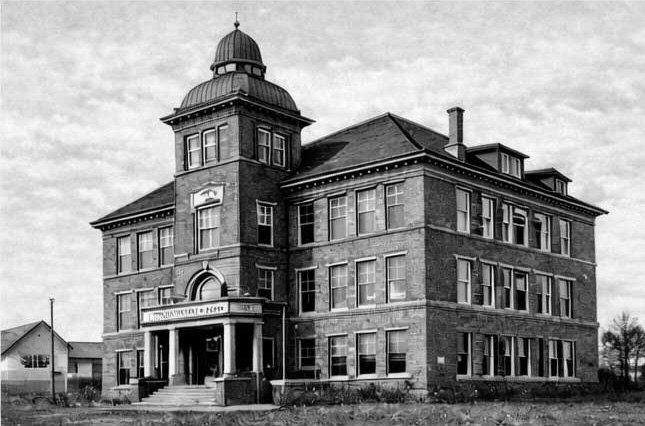
- Boley High School Ca 1917
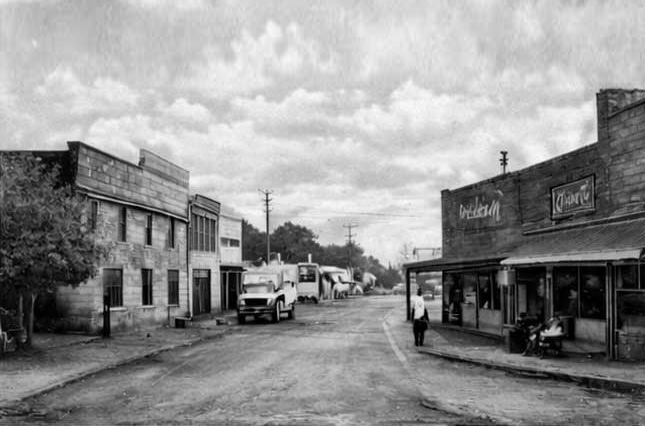
- Main Street looking North