
The Town Of Tullahasee - Oklahoma

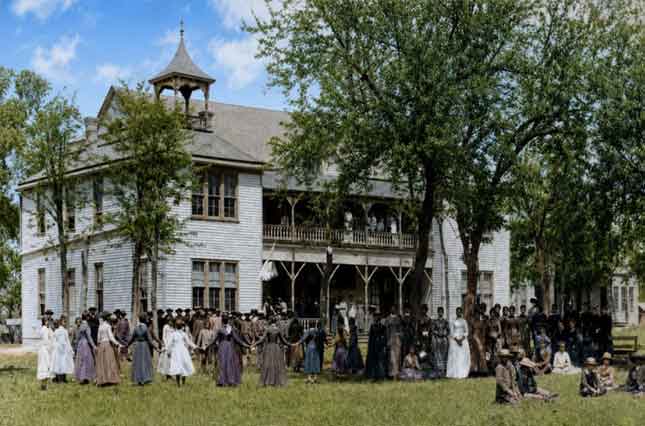
Tullahassee, Oklahoma: The Oldest Surviving Historic Black Town in Oklahoma
Nestled in the rolling countryside of Wagoner County, Tullahassee, Oklahoma, holds a unique place in American history. Widely recognized as the oldest surviving historic All-Black town in Oklahoma, Tullahassee tells a remarkable story of resilience, education, faith, and determination. While many of Oklahoma’s historic Black communities have faded with time, Tullahassee remains a symbol of the perseverance of the Creek Freedmen and the generations who built a thriving community from opportunity born out of hardship.
From Creek Mission to Freedmen Community
The story of Tullahassee begins long before Oklahoma became a state. In 1850, the Muscogee (Creek) Nation established the Tullahassee Mission School along the historic Texas Road, one of the major travel routes through Indian Territory. The school served Creek students and quickly became one of the most important educational institutions within the Creek Nation.
Following the Civil War, dramatic changes reshaped the region. Under the Treaty of 1866, formerly enslaved African Americans held by the Creek Nation—known as Creek Freedmen—were granted freedom and citizenship within the Creek Nation. As Freedmen families settled around Tullahassee, the demographics of the area gradually shifted.
After a devastating fire destroyed the original mission school in 1880, the Creek Nation relocated its students to another mission. On October 24, 1881, the Creek Council officially transferred the Tullahassee school and surrounding property to the Creek Freedmen. This historic decision laid the foundation for what would become Oklahoma’s oldest surviving historic Black town.
Building a Thriving Community
As the community grew, Tullahassee developed into an important agricultural and commercial center serving Black farmers throughout eastern Oklahoma.
A post office opened in 1899, with Professor Willis serving as the town’s first postmaster. The town incorporated in 1902 and was officially platted in 1907. Local leaders established the Tullahassee Townsite Company, led by A. J. Mason as president and L. C. Hartridge as secretary, to promote growth and encourage African Americans from the South to settle in the community during the era of Jim Crow segregation.
Transportation also helped fuel development. The Missouri, Kansas and Texas Railroad (Katy Railroad) passed through Tullahassee, providing residents with access to markets, supplies, and travel while connecting the town to other communities throughout Indian Territory.
Education at the Heart of the Community
Education has always been central to Tullahassee’s identity.
Perhaps the town’s greatest educational legacy came in 1916, when the African Methodist Episcopal (AME) Church established Flipper Davis College in the former mission buildings. Named in honor of African American leaders and educators, the institution became the only private college for African Americans in Oklahoma during its years of operation.
The college provided higher education opportunities for Black students at a time when educational options were severely limited across much of the United States. Although Flipper Davis College closed after the 1935 school year during the Great Depression, its influence helped educate generations of leaders and remains an important chapter in Oklahoma’s educational history.
Preserving a Historic Legacy
While Tullahassee’s population gradually declined during the twentieth century—as happened in many rural Oklahoma communities—its historical importance has never diminished.
The A. J. Mason Building, constructed in 1912 as a grocery store and commercial center, is today the only surviving original commercial building in the historic downtown district. Listed on the National Register of Historic Places, it stands as a reminder of the thriving business community that once served local residents and surrounding farms.
Another important landmark is the Carter G. Woodson School, recognized in Oklahoma’s African American historic resources for its role in educating generations of students. Together, these sites preserve the memory of a town whose contributions extend far beyond its size.
A Living Part of Oklahoma History
Although fewer than one hundred residents call Tullahassee home today, the town remains an important destination for historians, educators, and visitors interested in Oklahoma’s remarkable network of historic Black towns.
Its story represents more than the survival of a single community. Tullahassee reflects the determination of Creek Freedmen who transformed a former mission school into a prosperous town built upon education, faith, entrepreneurship, and self-governance. Their accomplishments helped shape the cultural and economic landscape of Indian Territory during a pivotal era in American history.
Today, preservation efforts and renewed public interest continue to shine a light on Tullahassee’s extraordinary past. As one of the surviving historic Black towns of Oklahoma, it serves as a lasting reminder that even the smallest communities can leave an enduring legacy for future generations.
Visitors exploring Oklahoma’s historic Black towns will find in Tullahassee not only a quiet rural community but also one of the state’s most significant landmarks in African American history—a place where resilience, education, and hope have endured for more than 175 years.