
The Town Of Taft - Oklahoma

Taft, Oklahoma: A Historic Black Town Built on Opportunity, Education and Community
Located just west of Muskogee in eastern Oklahoma, Taft is one of the thirteen surviving historic Black towns in the state and a lasting symbol of the determination and entrepreneurial spirit that shaped African American communities in Indian Territory. Founded during the early twentieth century on land allotted to Creek Freedmen, Taft became a place where Black families could own land, establish businesses, educate their children, and build a future free from many of the restrictions imposed elsewhere in the South.
Although its population has declined over the decades, Taft continues to preserve an important chapter in Oklahoma’s unique African American heritage.
From Twine to Taft
The community that would become Taft began around 1902 as a settlement known as Twine, named after William H. Twine, an attorney, newspaper editor, and influential African American leader who published the Muskogee Cimeter, one of Oklahoma’s most important Black newspapers. Twine played a significant role in advocating for African American political participation and economic opportunity during the territorial period.
When William H. Twine relocated to Muskogee, local residents voted in 1904 to rename the town Taft in honor of William Howard Taft, who at the time served as Secretary of War under President Theodore Roosevelt and would later become the 27th President of the United States. The community retained its identity as one of Oklahoma’s growing All-Black towns, attracting families seeking land ownership and self-government.
A Community Built by Creek Freedmen
Like many of Oklahoma’s historic Black towns, Taft traces its origins to the Creek Freedmen—formerly enslaved African Americans who gained citizenship within the Muscogee (Creek) Nation after the Civil War.
When tribal lands were divided into individual allotments around the turn of the twentieth century, many Freedmen selected land near one another. These close-knit farming communities evolved into prosperous towns where residents could own businesses, establish churches, elect local officials, and educate their children.
Taft became one of more than fifty historic Black towns founded across Oklahoma, but unlike many others, it has survived into the twenty-first century. Today it remains one of only thirteen historic Black towns still in existence.
Education and Economic Growth
During its early years, Taft developed into a thriving rural community. Residents built churches, schools, general stores, and a sawmill, creating the infrastructure needed for a self-sustaining town. Agriculture served as the economic backbone, with many families farming cotton, corn, and livestock on nearby land.
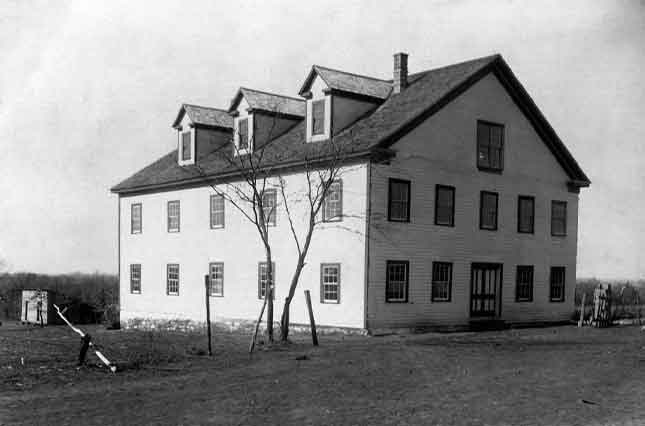
One of the community’s most significant institutions was the State Industrial School for Negro Boys, established near Taft in 1914. The school provided vocational education and practical training while also serving as a major employer in the area for many years. Although educational philosophies have changed dramatically since that era, the institution played an important role in the town’s economy and regional identity throughout much of the twentieth century.
Population Changes Through the Years
Like many rural communities across Oklahoma, Taft experienced periods of both growth and decline.
The town’s population grew steadily during its first decades as Black families established farms and businesses throughout the surrounding countryside. Census records show Taft reaching its highest population during the mid-twentieth century, with 772 residents in 1940.
However, changing agricultural practices, mechanization, and greater employment opportunities in larger cities led many younger residents to leave. By 1990, the population had declined to approximately 400, and today fewer than 200 residents remain.
Despite these changes, Taft has maintained a strong sense of community and pride in its unique heritage.
Preserving a Remarkable Legacy
Taft represents far more than population statistics. It is one of the few remaining communities where visitors can still experience the legacy of Oklahoma’s historic Black Town movement.
Community leaders and historians continue working to preserve local landmarks and educate future generations about Taft’s remarkable story. The town is frequently featured in educational programs, documentaries, and historical tours that highlight Oklahoma’s unparalleled collection of historic Black communities.
Modern productions such as OETA’s Black Frontier Towns documentary series have introduced a new generation to Taft’s history, emphasizing the resilience, leadership, and cultural importance of its residents.
A Lasting Symbol of Resilience
Taft’s story is one of courage, vision, and perseverance. Founded by African Americans determined to create opportunity on their own terms, the town became a place where education, faith, business ownership, and community leadership flourished.
Although smaller today than during its peak years, Taft remains an enduring reminder of one of the most extraordinary chapters in Oklahoma history. Alongside communities such as Boley, Langston, Rentiesville, and Tullahassee, Taft continues to honor the legacy of the Black pioneers who transformed the Oklahoma frontier into a place of hope and opportunity.
For visitors exploring Oklahoma’s Historic Black Towns Trail, Taft offers more than a glimpse into the past—it stands as a living testament to the determination, independence, and enduring spirit of the people who built one of America’s most remarkable community movements.