
The Town Of Red Bird - Oklahoma

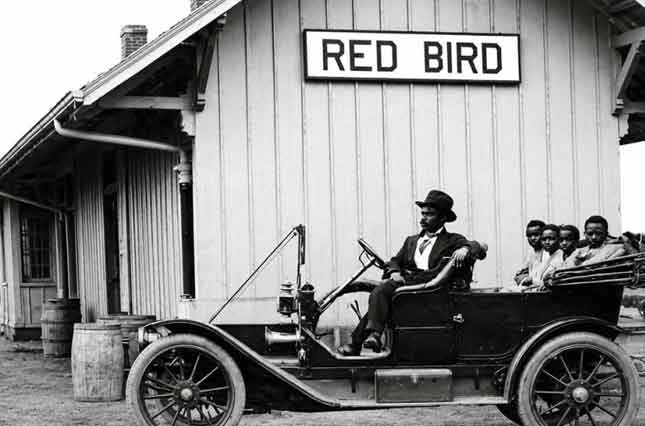
Red Bird, Oklahoma: A Historic Black Town Built on Leadership, Education, and Opportunity
Nestled in Wagoner County in eastern Oklahoma, Red Bird is one of the thirteen surviving historic Black towns in Oklahoma and stands as a remarkable example of African American determination, entrepreneurship, and civic leadership during the early twentieth century. Founded by visionary leaders who believed Black families deserved the opportunity to own land, build businesses, educate their children, and govern their own communities, Red Bird quickly became one of Oklahoma’s most successful Black settlements.
Although its population has declined over the decades, Red Bird remains one of the state’s most historically significant communities and continues to preserve the legacy of those pioneering families who built a thriving town from the Oklahoma frontier.
The Founding of Red Bird
The first settlers arrived in the area before 1900, when the Barber and Ruffin families established farms and homes on fertile land in what was then Indian Territory. As word spread of the opportunities available, more African American families relocated to the region, laying the foundation for a prosperous and close-knit community.
A post office opened in 1902, with A. A. White serving as Red Bird’s first postmaster. The establishment of postal service marked an important milestone, connecting the growing town with communities throughout Indian Territory and the rest of the nation.
One of the town’s principal founders was E. L. Barber, whose leadership helped shape nearly every aspect of Red Bird’s early development.
A Vision for Growth
Like many of Oklahoma’s historic Black towns, Red Bird was established with a clear purpose—to create a community where African Americans could prosper through land ownership, education, business, and self-government.
To encourage settlement, local leaders organized the Red Bird Investment Company, whose mission was to recruit African American families from across the South. Company representatives traveled throughout states such as Mississippi, Alabama, Arkansas, Louisiana, Georgia, and Texas, promoting Red Bird as a place where families could escape many of the hardships of Jim Crow and build a better future.
The community officially celebrated its grand opening on August 10, 1907, drawing more than 600 visitors—an impressive gathering that demonstrated the excitement surrounding one of Oklahoma’s newest Black towns.
Faith and Community Leadership
Religion became the heart of Red Bird’s civic life.
In 1899, E. L. Barber organized the First Baptist Church, which quickly became the largest and most influential church in the community. Beyond serving as a place of worship, the church hosted community meetings, educational programs, social gatherings, and charitable activities that strengthened local families.
Barber also became Red Bird’s first Justice of the Peace and later served as one of the town’s earliest mayors. His leadership helped establish the framework for local government and demonstrated the importance of civic responsibility within Oklahoma’s Black Town movement.
Education Shaped the Future
Education has always been one of Red Bird’s greatest achievements.
In 1919, Professor J. F. Cathey developed plans for Miller Washington High School, which soon became one of eastern Oklahoma’s most respected African American educational institutions. For four decades, the school prepared generations of students through academic instruction, athletics, music, and leadership opportunities.
Miller Washington High School remained an important center of community life until 1959, when declining enrollment led to its closure following school consolidation.
Today, the school building is listed on the National Register of Historic Places, preserving its legacy as one of Oklahoma’s most significant African American educational landmarks.
A Thriving Commercial District
During its early decades, Red Bird enjoyed a vibrant business district that served residents throughout the surrounding countryside.
Among the town’s most notable historic buildings are Sharp’s Grocery and Masonic Hall, constructed in 1910, and the historic Red Bird Drug Store. Both buildings remain listed on Oklahoma’s Landmark Inventory, recognizing their importance as rare surviving examples of commercial architecture from Oklahoma’s Black Town era.
Local businesses supplied groceries, medicines, hardware, clothing, and other necessities while creating employment opportunities that allowed residents to build financial independence within their own community.
Fighting for Voting Rights
Red Bird also played an important role in Oklahoma’s civil rights history.
Resident I. W. Lane successfully challenged discriminatory Oklahoma voting laws designed to prevent African Americans from exercising their constitutional right to vote. His legal efforts became part of the broader struggle against voter suppression during the early twentieth century and demonstrated that Red Bird’s influence extended well beyond its city limits.
The courage shown by Lane and other local leaders helped pave the way for future advances in voting rights and equal protection under the law.
Preserving a Historic Legacy
Red Bird reached a population of approximately 140 residents in 1907, growing to 218 by 1930 as agriculture and local commerce flourished. Like many rural Oklahoma communities, the town later experienced population declines as mechanized farming, improved highways, and urban employment opportunities encouraged younger generations to relocate. By 1990, the population stood at 166.
Despite these changes, Red Bird continues to preserve its remarkable heritage. Historic buildings, churches, and educational landmarks remain powerful reminders of a community built through determination, faith, and vision.
Today, visitors exploring Oklahoma’s Historic Black Towns Trail discover in Red Bird a town whose influence extends far beyond its size. Alongside communities such as Boley, Langston, Rentiesville, Taft, Summit, and Tullahassee, Red Bird stands as a lasting testament to the resilience and achievements of African American pioneers who helped shape Oklahoma’s history.
More than a century after its founding, Red Bird remains one of Oklahoma’s greatest historic treasures—a community where leadership, education, entrepreneurship, and the pursuit of equality created a legacy that continues to inspire future generations.