
The Town Of Broksville - Oklahoma

Brooksville, Oklahoma: A Historic Black Community Built on Faith, Education, and Determination
Part of the 13+1 Incorporated Black Towns of Oklahoma
Hidden among the rolling countryside of Pottawatomie County is the historic community of Brooksville, Oklahoma, one of the remaining incorporated historic Black towns that helped shape Oklahoma’s unique African American heritage. Although small in size today, Brooksville once stood as a thriving agricultural and railroad community where families built businesses, churches, schools, and a future founded on opportunity and self-determination.
Established in 1903, Brooksville became home to educators, entrepreneurs, ministers, and farmers who believed that land ownership, education, and strong community values could create lasting prosperity. More than a century later, its story remains an important chapter in Oklahoma’s remarkable legacy of historic Black towns.
From Sewell to Brooksville
Brooksville’s story began in 1903, when the community was originally established under the name Sewell, honoring a white physician who owned much of the surrounding land and provided medical care to area residents.
As the community continued to grow, local leaders sought a name that better reflected the people who were building the town. In 1912, the community was officially renamed Brooksville in honor of A. R. Brooks, a successful cotton buyer, farmer, and one of the first African Americans to settle in the area. Brooks became an influential leader whose success symbolized the opportunities available in Oklahoma’s developing Black communities.
His son, W. M. Brooks, later became Brooksville’s first postmaster, helping connect the growing town with communities across Oklahoma and the nation.
A Prosperous Railroad Community
Like many of Oklahoma’s historic Black towns, Brooksville benefited greatly from the arrival of the railroad.
Located along the Atchison, Topeka and Santa Fe Railway, the town became an important shipping point for cotton and agricultural products grown throughout the surrounding countryside. The railroad provided farmers with access to larger markets while bringing new residents and businesses into the community.
During its most prosperous years, Brooksville featured:
- A Santa Fe Railroad station
- Three hotels
- Two physicians
- Two stone mills
- Local businesses serving residents and nearby farming communities
The combination of transportation, agriculture, and local commerce allowed Brooksville to develop into one of the region’s active rural communities during the early twentieth century.
Agriculture Was the Foundation
Cotton farming became the economic backbone of Brooksville.
Families worked the fertile land surrounding the community while merchants, cotton buyers, and mill operators supported the local agricultural economy. Like many Black-owned communities across Oklahoma, Brooksville represented more than economic success—it represented independence.
For African American families who had only recently gained the opportunity to own land following Reconstruction, communities like Brooksville offered a chance to build wealth, educate their children, and establish churches and civic organizations under their own leadership.
Education Opens New Doors
One of Brooksville’s greatest achievements came through its commitment to education.
In 1924, the community received assistance from the Julius Rosenwald Fund, one of the most influential educational philanthropy programs in American history. Created through a partnership between businessman Julius Rosenwald, president of Sears, Roebuck and Company, and educator Booker T. Washington, the Rosenwald Fund helped build nearly 5,000 schools for African American children throughout the South during the early twentieth century. These schools became symbols of hope, opportunity, and community investment.
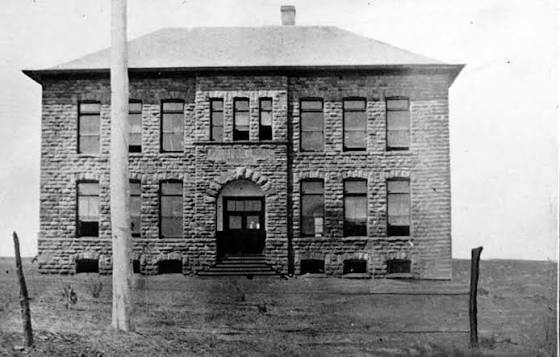
With Rosenwald assistance, Brooksville constructed the impressive Banneker School.
Under the leadership of W. T. McKenzie, the school featured:
- Four large classrooms
- A 300-seat auditorium
- A library
- A fully equipped domestic science room
For a rural Oklahoma community during the 1920s, these facilities were exceptional and demonstrated the town’s commitment to providing quality education for its children.
A Distinguished Educator
Brooksville’s educational legacy became even stronger through the work of George W. McLaurin, the first African American graduate of the University of Oklahoma.
McLaurin taught at Banneker School during its early years and later became nationally recognized for challenging segregation in higher education. In 1948, McLaurin successfully fought for admission to the University of Oklahoma’s graduate program after initially being forced to sit in segregated classrooms.
His legal battle became one of the landmark civil rights cases leading toward the eventual desegregation of American public education.
Brooksville can proudly claim that one of Oklahoma’s most influential educators once taught its children.
Faith at the Center of Community Life
Churches played an essential role in Brooksville’s development.
In 1906, St. John’s Baptist Church was organized under the leadership of Rev. Jedson White. Shortly afterward, the congregation constructed a permanent church building that continues to stand as one of the community’s oldest surviving landmarks.
Rev. White was more than a pastor.
He became one of Brooksville’s strongest advocates, traveling throughout the South encouraging African American families to relocate to Oklahoma and establish new lives in Brooksville. His efforts helped increase the town’s population while strengthening its religious and social foundation.
Today, pieces of that history remain visible. The church’s original pulpit and pews have been preserved and moved to the community’s Holiness Church, providing a direct connection to Brooksville’s earliest days.
Challenges Through the Years
Like many small agricultural communities, Brooksville experienced significant changes during the twentieth century.
Mechanization of farming, economic shifts, and migration to larger cities gradually reduced the town’s population.
Historical records indicate:
- During the 1920s, Brooksville was home to approximately 400 residents.
- By the 1990 Census, the population had declined to 66 residents.
Although the population became much smaller, the community never lost its identity or its historical importance.
The original Banneker School eventually burned and was replaced by a wooden school building that continued serving students until 1968. After the school closed, the building found new life as a community center and remains an important part of Brooksville’s civic history.
Preserving Brooksville’s Legacy
Today, Brooksville stands as one of Oklahoma’s remaining incorporated historic Black towns and serves as an important reminder of the determination, resilience, and vision of its founders.
Visitors can still experience many connections to the town’s past, including:
- Historic St. John’s Baptist Church
- The former Banneker School site
- Community buildings
- Historic cemeteries
- Original townsite locations
Brooksville’s story also reflects the broader history of Oklahoma’s more than 50 historic Black towns and settlements established between the late nineteenth and early twentieth centuries.
Looking Toward the Future
Across Oklahoma, interest continues to grow in preserving the state’s historic Black towns through heritage tourism, education, and historical research.
Brooksville’s rich history offers opportunities for future generations to learn about:
- African American entrepreneurship
- Rural education
- Rosenwald Schools
- Railroad development
- Faith-based community leadership
- Civil rights history
By preserving these stories today, communities like Brooksville continue to inspire tomorrow’s leaders while honoring those whose courage and determination built one of Oklahoma’s most remarkable historical legacies.
More than 120 years after its founding, Brooksville remains a symbol of perseverance, education, and community—a place where history continues to live through its people, its landmarks, and the enduring spirit of those who called it home.