
The Town Of Clearview - Oklahoma

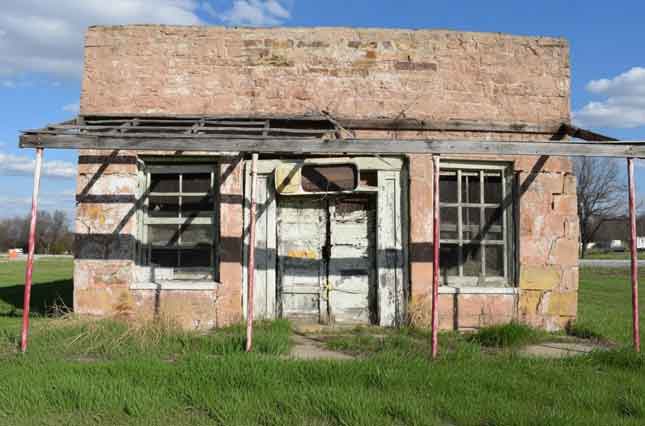
Clearview, Oklahoma: A Historic Black Town Built on Enterprise, Education, and Community
Part of the 13+1 Incorporated Black Towns of Oklahoma
Along the historic route of the Fort Smith and Western Railroad in Okfuskee County lies the Town of Clearview, Oklahoma, one of the state’s remaining historic all-Black towns. Founded in 1903, Clearview was established by visionary African American entrepreneurs who believed that economic independence, education, and land ownership could provide future generations with opportunities that were often denied elsewhere.
Although today Clearview is a quiet rural community, its history tells the remarkable story of ambitious founders, thriving businesses, higher education, and a community that became an important part of Oklahoma’s Black heritage.
From Lincoln to Clearview
When the town was first organized in 1903, it was originally known as Lincoln. The founders—J. A. Roper, Lemuel Jackson, and John Grayson—created the Lincoln Townsite Company with a clear purpose: attract African American settlers and build a prosperous community along one of Oklahoma Territory’s important railroad corridors.
From the beginning, the railroad was central to the town’s success. The Fort Smith and Western Railroad connected Clearview to larger markets, allowing local farmers and merchants to transport crops, livestock, and goods while attracting new residents looking for opportunity in Indian Territory.
Not long after its establishment, postal officials briefly changed the post office name to “Abelincoln” before ultimately adopting the name Clearview, which the town continues to use today.
Building a Self-Sufficient Community
Like many of Oklahoma’s historic Black towns, Clearview’s founders understood that success depended upon more than simply selling town lots.
John Grayson and J. A. Roper organized the Abe Lincoln Trading Company, which quickly became one of the community’s most important businesses. The company operated as:
- A general merchandise store
- A produce buying operation
- A real estate business
- A supply center for local farmers
John Grayson also became Clearview’s first postmaster, helping establish the town’s connection with the outside world, while J. A. Roper operated a sawmill and lumberyard, supplying building materials needed for homes, churches, businesses, and schools.
These businesses created local jobs while keeping much of the town’s economy within the community itself—a principle shared by many of Oklahoma’s successful Black towns.
A Town on the Rise
Clearview grew rapidly during its first few years.
By 1904, residents could already boast several amenities uncommon in many frontier communities, including:
- A two-story hotel
- A commercial print shop
- A brick school building
- Two churches
- Local businesses and professional services
The community also supported its own newspaper.
Originally called The Lincoln Tribune, the publication later became the Clearview Patriarch, serving as both a local newspaper and a promotional tool encouraging African American families throughout the South to relocate to Oklahoma. Newspapers played an important role in many Black towns by sharing news, advertising businesses, and promoting opportunities for land ownership and entrepreneurship.
Agriculture and Land Ownership
Agriculture became the backbone of Clearview’s economy.
Many residents owned or leased farmland where they raised cotton and other crops. Owning land represented more than financial security—it symbolized independence and self-determination during a period when African Americans faced significant barriers throughout much of the United States.
One of the town’s most influential citizens was J. E. Thompson, who moved to Clearview around 1911 after some of the original founders left the community.
By 1914, Thompson attended a meeting of Booker T. Washington’s National Negro Business League, where he announced that he owned or managed approximately 5,800 acres of land in Okfuskee County. His success demonstrated the remarkable opportunities that existed for African American farmers and businessmen in Oklahoma during the early twentieth century.
Education Was a Priority
Like many historic Black communities, Clearview recognized that education would determine its future.
The town’s early brick school became a source of pride for residents, providing educational opportunities for local children.
An even larger milestone came in 1916, when educator J. C. Leftwich opened the Creek and Seminole Agricultural College just northeast of town.
The college operated until 1920 and focused on agricultural training and vocational education modeled after the educational philosophy promoted by Booker T. Washington at Tuskegee Institute. Leftwich envisioned a school that would prepare students not only academically but also with practical skills in farming, industry, and business.
Although the college operated for only a few years, it reinforced Clearview’s reputation as a community committed to education and advancement.
Population Growth and Change
Clearview reached its highest population during Oklahoma’s early statehood years.
Historical records show:
- 1907: Population approximately 618
- Late 1930s: Population declined to about 420
- 1990 Census: 47 residents
- 2020 Census: 41 residents
The decline mirrored what happened in many rural communities throughout Oklahoma.
Several factors contributed to population loss, including:
- The Great Depression
- Falling cotton prices
- Mechanization of agriculture
- Migration to larger cities for employment
- Changes in transportation after railroads declined
Despite these challenges, Clearview survived while many historic communities disappeared entirely.
A Community That Endures
Although small in population today, Clearview continues to celebrate its heritage.
The town hosts its annual Clearview Rodeo, bringing together former residents, descendants, visitors, and supporters each year. Like similar events in Boley and other historic Black towns, the rodeo celebrates Western traditions, family reunions, and community pride while helping preserve local history.
Clearview is also home to the Oklahoma African American Educators Hall of Fame, further reflecting the community’s long-standing commitment to education and recognizing the achievements of African American educators across the state.
Preserving an Important Legacy
Today, Clearview stands as one of the remaining incorporated historic Black towns in Oklahoma—a living reminder of the determination and vision of its founders.
Its story is about much more than population numbers.
It is about entrepreneurs who built businesses from the ground up.
It is about educators who believed knowledge could change lives.
It is about farmers who achieved land ownership and independence.
Most importantly, it is about a community that continues to preserve an important chapter of Oklahoma and American history.
As interest grows in heritage tourism and the preservation of Oklahoma’s historic Black towns, Clearview offers visitors an opportunity to experience a place where determination, education, and community spirit shaped generations. Though quieter than it once was, its legacy remains an enduring part of Oklahoma’s cultural landscape and serves as an inspiration for future generations to remember, preserve, and celebrate these remarkable communities.